
Although Mexico was a neighbor country for most of my life, it took several decades to make my first visit. Mexico was my first stop on sabbatical before heading to South America. A work colleague had recently started staying in Mexico City and I figured this was my best opportunity to have an experience in Mexico that wouldn’t involve all-inclusive resorts and boozy beach days.
Impressions
The question on my mind when visiting Mexico was how safe the areas were that I would be visiting. Depending on who you ask you’ll be told “only stay at a resort and never leave it”, or to “just relax, man”. It certainly depends on where you visit. The areas I visited all felt quite safe. I never felt a threat of violence from anyone I encountered. The only negative encounters were the people who politely try to rob you when driving a car, or one person while on a hiking trail. More on that below.
Having learned very little about Mexico in my formal education, this trip was a crash course of sorts in Mexican history and culture. From what I understand areas of Mexico are still contested, so the country is not completely unified. Some areas have no police force, or provide their own. Police pickups with machine guns mounted on the back roam the streets of Oaxaca City. Large military trucks barrel down the highways and through rural roads with camouflage clad men filling the beds in an apparent show of force.
The people are humble and have a sense of humor about the state of their country. To me Mexico is a country in transition. It seems to earnestly be working to shed its image as a violent drug cartel controlled land with a few green zones for tourists. For me, that effort was mostly successful.
Transportation
Plane
I took a flight from Miami to Mexico City. Something important to note is that when clearing customs you’ll fill out a form with a top and bottom portion which asks for identical information. The customs officer retains one part of the form and you the other. This is your tourist card. Hold onto this. You’ll need it when you are exiting the country. Other countries, such as Chile, operate with a similar system. If you misplace this card, it can be a headache when you are catching your flight out of the country.
The Mexico City airport is a great hub for getting around Mexico for regional flights. I flew to Oaxaca City from there and once my travels in Oaxaca were complete I flew from Oaxaca to Mexico City and then over to Cancún for my Yucatán adventures. I found upgrades such as seat selection with more legroom and additional baggage allowance to be quite reasonable.
Taxi
Upon arriving in Mexico City by plane, my first task was to find my way to my AirBnB in the neighborhood La Condesa. Given the late hour and my eagerness to get settled in I wanted to take a taxi. All three airports I flew into during my trip arrange taxi service in the same manner.
Inside the airport there is a desk that accepts cash or card. The person at the desk will ask you what your destination is. A flat rate fee is charged and you receive a receipt. Outside is a taxi stand area where an attendant will take your receipt which acts essentially as a ticket. The attendant shows you to a taxi, validates the ticket in front of the driver, and you hop in the taxi to be driven to your destination. This all appears to be in an effort to ensure the flat rate fee is honored and that there is no miscommunication between the passenger and driver.
What I was most impressed by was the kindness of the driver when I arrived at my destination. I had trouble figuring out the door code for the building I was staying in and he waited until he saw that I had gotten inside alright. Whether this was individual kindness, or some sort of initiative to make tourists feel welcome in Mexico, I don’t know.
In Mexico City Uber is available and quite cheap. Uber was not available in any of the other places I visited, though, so you’ll have to be comfortable arranging taxis on your own, through your hotel, or restaurant in much of Mexico.
Bus
I relied on bus service for my travels in the state of Yucatán. The company I used exclusively was ADO. It’s considered a first class bus service. The rates seemed reasonable to me. It’s easy to book with their website or phone app. The buses ran on time and the staff seemed to take the security of bags stored underneath seriously. You can choose your seat at time of booking and it’s quite comfortable even for longer rides like my trip from Cancún to Bacalar, which was about 5.5 hours.
Car Rental
Renting a car in Mexico is a mixed bag. So long as you know what you’re getting into you should do fine.
First off the price quoted if you booked online does not include insurance. It doesn’t matter if your credit card provides insurance, or you added insurance via Expedia when booking. The only insurance the rental company will accept is their own, it seems. This adds a significant cost to the initial quote. You can try to fight it, but it seemed futile to me.
Second, the roads in Mexico aren’t exactly in the best shape. Whether in Oaxaca City, on highways, or traveling on mountain roads, expect lots of potholes and topes. I opted for an SUV to get some additional clearance which goes a long way towards ensuring the undercarriage doesn’t get scraped.
Third, it’s a bit anything goes on the road. The breakdown lane is used as a slow lane and often drivers pass while halfway in the lane of oncoming traffic. City driving is particularly interesting as one must infer that at each street crossing you are required to stop and give way if another car is waiting. Most streets are one way in the city with an arrow indicating the direction of traffic. Driving in Mexico requires being a bit aggressive. Be prepared to be honked at a lot.
Fourth, expect to encounter fake tolls. Men will hold ropes across roads, or occupy abandoned toll booths and ask for what amounts to a few dollars. In my experience you can simply drive past them, or in another’s experience, wait them out to let traffic build up. There didn’t seem to be a threat of violence for non-compliance, but it doesn’t feel great being taken advantage of.
If that doesn’t scare you off, grab a car and hit the road! I drove around the state of Oaxaca and enjoyed being able to come and go as I pleased between different hiking destinations. It also made for some great travel stories.
Destinations
Oaxaca
I flew into Oaxaca and spent a night in Oaxaca City. It’s a colonial style place with no tall buildings around. Lots of restaurants, churches, outdoor vendors, and music to enjoy. I particularly enjoyed the Museo Textil de Oaxaca.
From there it was over to San Miguel Amatlán for some hiking. The drive up has a lot of switchbacks as you climb your way up the mountain. The mountain ranges are beautiful. In the distance you can see clouds crashing into the mountain tops and pouring down the other side.
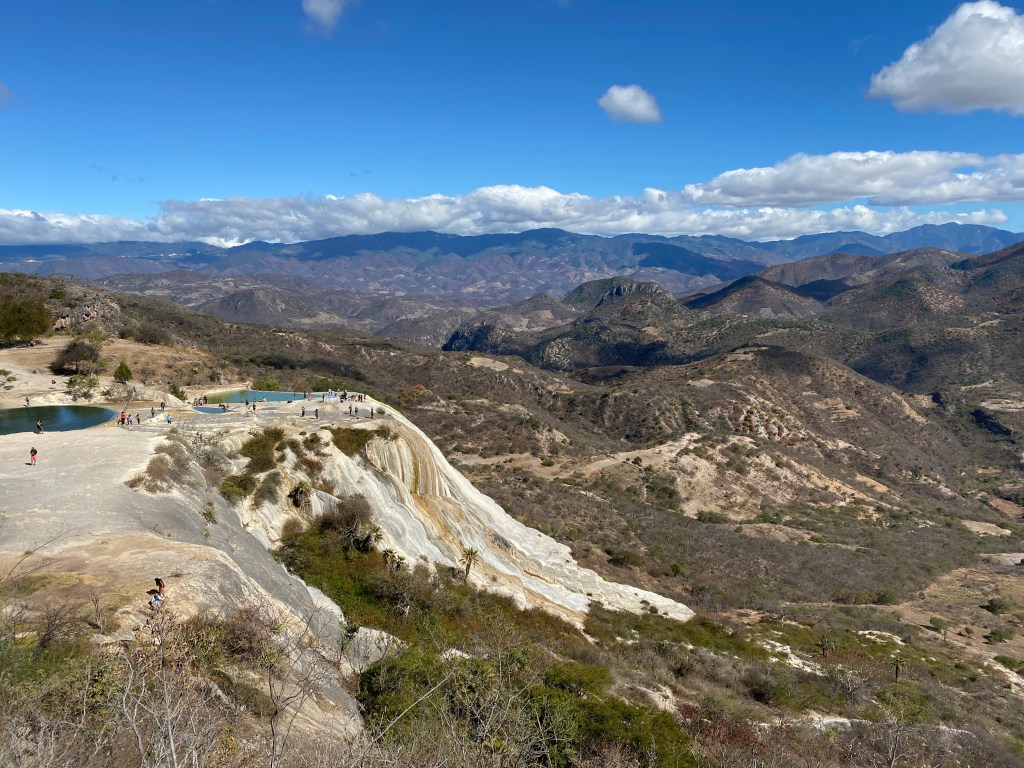
Another highlight was Hierve el Agua. Overly mineral saturated water originating from hot springs spill down the cliffs and petrify creating what looks like a melted cliffside. It’s an easy hike and on a warm day worth bringing a bathing suit. Watch out for the fake toll a couple kilometers before the entrance. It’s right before parking that there is what appears to be a legitimate person charging for entrance.
Bacalar
After Oaxaca I took a flight to Cancún with a layover in Mexico City. I was looking for a low key experience with some natural beauty, but still enough nightlife to have something to do in the evening. I booked a bus ticket with ADO and left early morning from Cancún with a destination of Bacalar.
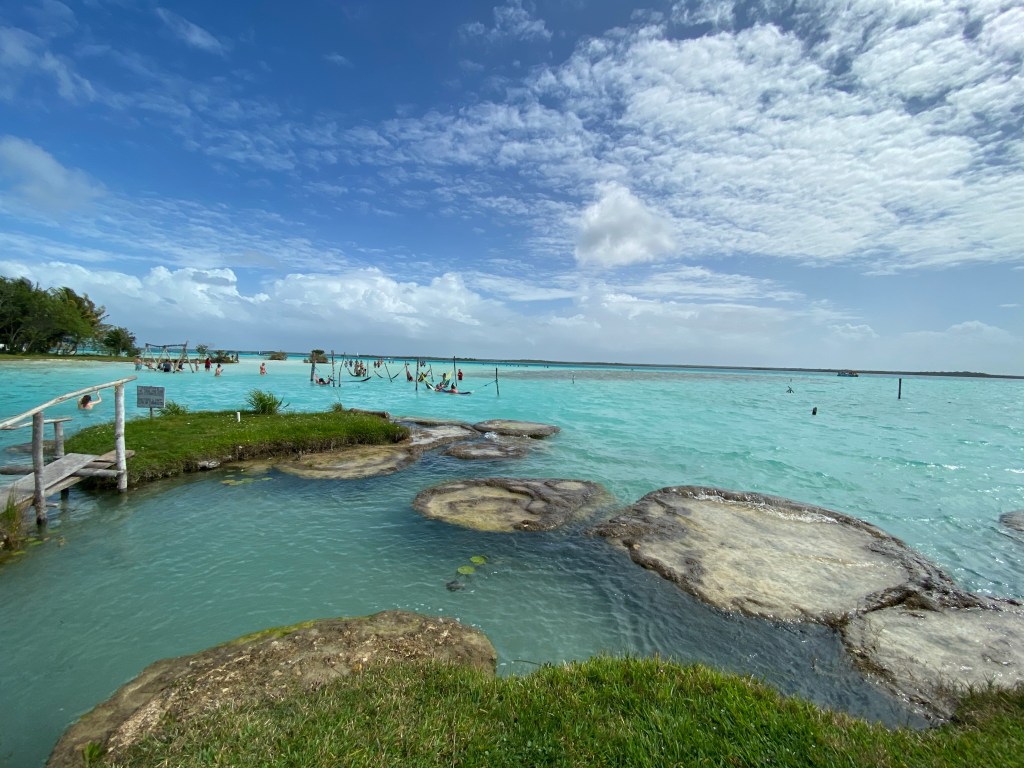
Bacalar is famous for its cenotes and stromatolites. I visited Cenote Azul and Instagram famous Cenote Cocalitos. Both are worth a visit, but Cocalitos really steals the show. I have never seen a body of water in so many shades of blue and green at the same time. Also, this is a great spot to see stromatolites up close and personal.
A memorable meal I had was at Kai Pez. I ordered fish tacos el pastor as an appetizer and they were so good I wanted to cancel my main. Those tacos changed my life.
Another highlight of Bacalar was the Yak Lake House. Although I didn’t stay there, they were kind enough to give me a visitor wrist band and let me have a drink at their bar. The drinks were very affordable compared to some of the other bars nearby and the liquor to mixer ratio was about 1:1. I made friends fast there.
My luck kept going and one of my new friends from the hostel asked me if I was interested in going to Calakmul. I had no idea what or where that was, but was intrigued. Calakmul turned out to be my favorite part of the entire trip to Mexico.
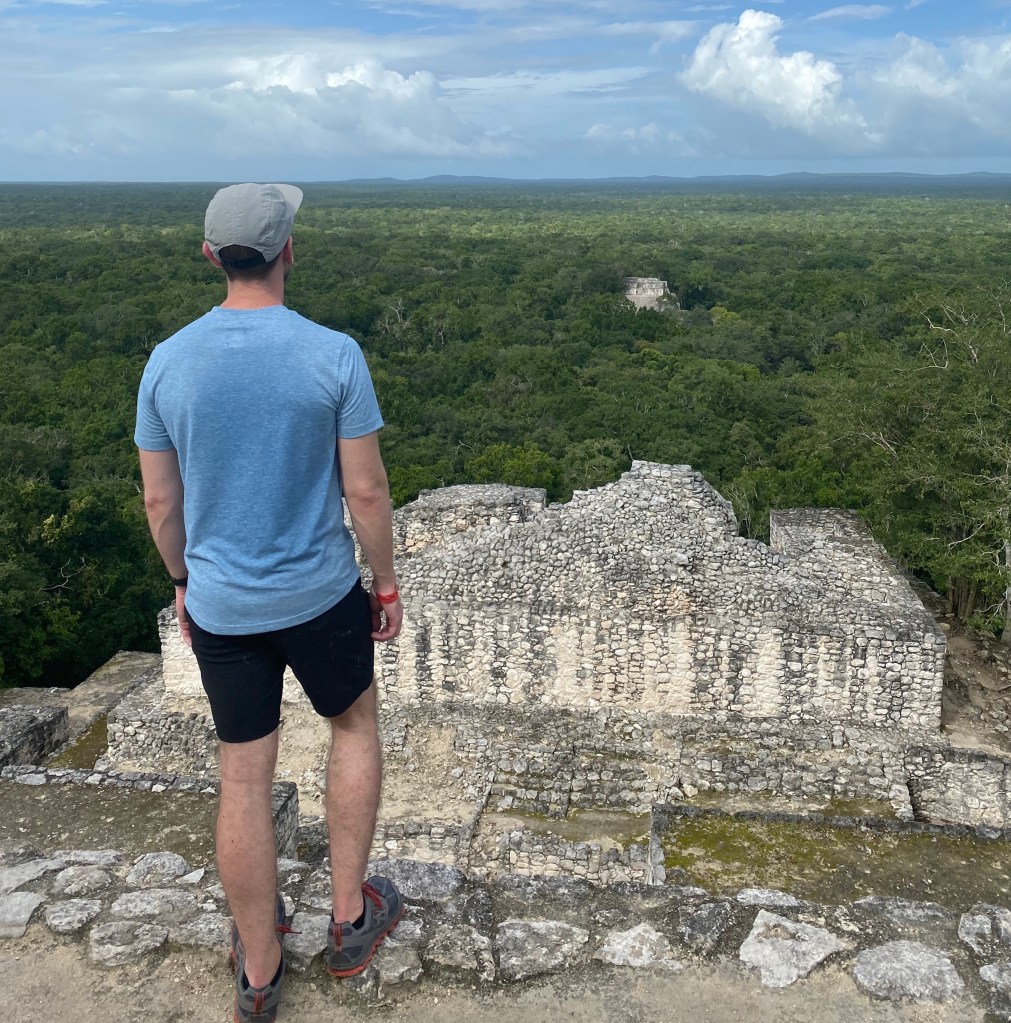
Calakmul is a Maya archaeological site with an impressive amount of ruins. Endless numbers of structures, including one of the tallest pyramids ever discovered in the region. It’s just shy of 4 hours drive from Bacalar and totally worth the drive. What really sealed the deal for me to go was when I learned you could climb the structures. Climbing Structure II (the tallest) and looking back at Structure I (second tallest) that I had climbed earlier while watching monkeys swing through the trees of the jungle was an unforgettable moment.
Tulum
It seems Tulum has been getting more and more popular with tourists and it’s easy to see why. The beaches are beautiful, the nightlife is great, and there are lots of Maya ruins to visit in the area. I booked an AirBnB that came with a bike. Biking is a great way to get around Tulum.
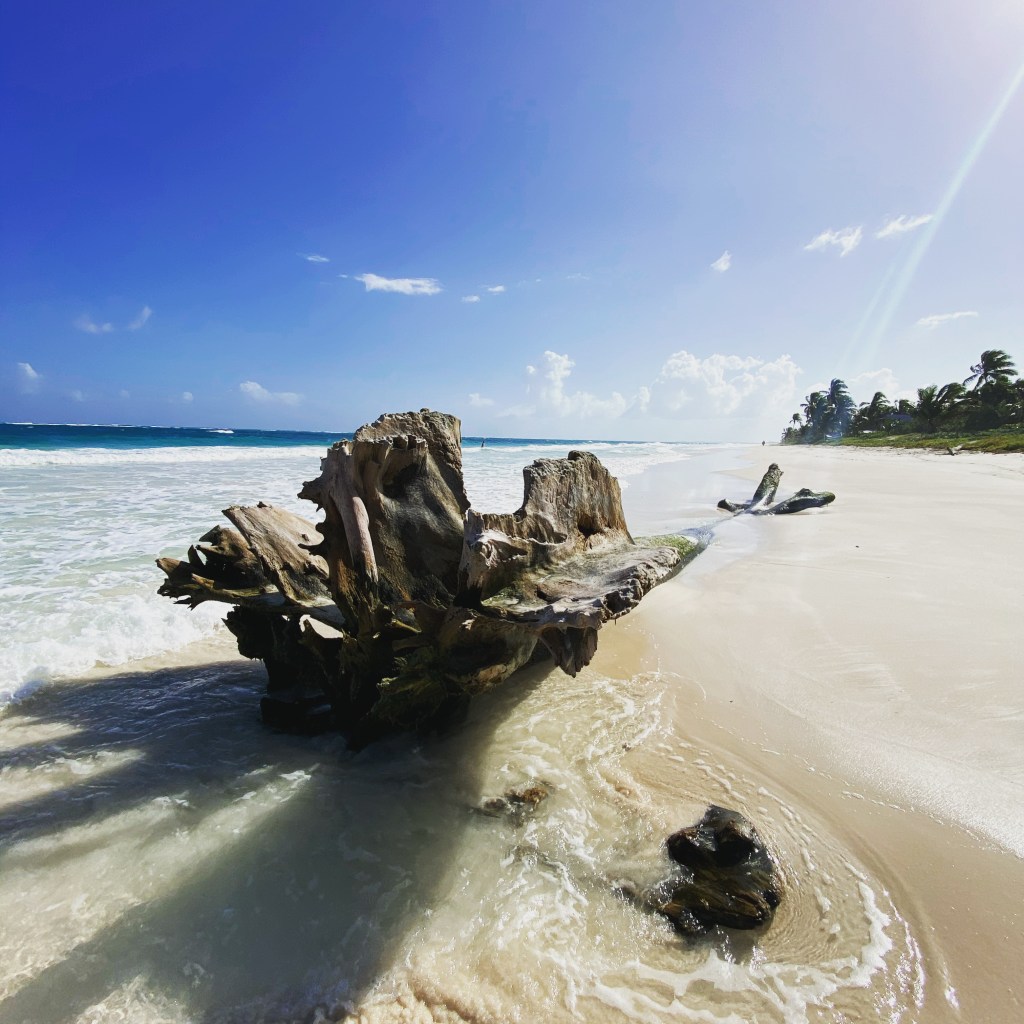
Beaches are definitely a highlight of Tulum. The jungles pushes right up against them making for beautiful walks along the coast with waves, bobbing boats, and palm trees curving overhead.
One beach option is referred to as the “public beach” area just south of the Tulum Ruins. Playa Santa Fe was full of people laying out on beach towels, swimming, and taking in the vibes. There are lots of small fishing boats anchored here close to shore which adds to the atmosphere. There are beach clubs as well where you can pay to use a beach chair, or just grab food and drinks.
Going further south is an area a lot of people seem to miss out on. You get the impression you’re not welcome unless you’re staying at one of the hotels. You can definitely access the beach, but since just about every inch is fenced off in this area it requires walking through a hotel to get there. Any place that advertises a “beach club” is a good option to use for access to the beach. The deal with most of them is that if you aren’t staying at the hotel, but want to use their beach chairs, you have to wrack up a minimum $50 tab at the restaurant/bar. Papaya Playa Project and The Nest are worth checking out if this option interests you. If you’re not into that, just bring a towel and enjoy much less crowded, and in my opinion, more beautiful beaches for free. Just act like you own the place and walk straight through the hotel and out the back to access the sandy oasis on the other side.
A third beach option is to bring your bathing suit to the Tulum Ruins. The ruins are worth a visit on their own. Be sure to bring cash to buy a ticket. You’ll have a lot of people approach you to skip the line by hiring them as a tour guide. They don’t charge much and seemed to offer some good knowledge, but I opted just to wait in line and wander around myself. Once inside there’s an area where you can access a small beach. I saw a good number of people there, mostly swimming.
Speaking of ruins, I did a day trip to Chichén Itzá. You can easily organize the trip yourself. ADO runs bus service between Tulum and Chichén Itzá. The schedule isn’t that great though. You’ll end up passing a lot of hours after you get dropped off until the afternoon bus picks you back up. I chose to go on a tour.
It was a guided tour consisting of a trip to a cenote, Chichén Itzá ruins, and a colonial town. This all costs you $55 plus a discretionary tip. The entrance to Chichén Itzá plus the roundtrip ADO bus ends up costing roughly this much, so I decided the tour was worth it. There were some downsides, however.
The transportation was in a passenger van, so it was cramped. The tour was done in mixed Spanish and English. A few words would be said in English, then in Spanish. I tuned out for most of it as I found myself decoding both languages and getting fatigued. Lastly, the tour is quite, well, touristy. Before entering the cenote they want you to walk through a gift shop under a tent. They insist you wear a life jacket to swim in the cenote, although I can’t imagine the circumstances one could drown in a crowded pool only a couple feet deep. The last part of the tour is a visit to a colonial town that is so brief it’s hard to justify its inclusion on the tour.
That said, I think the price is fair for what you get. The food at the lunch buffet was not going to win any awards, but it all tasted fine and there was a nice variety of items to choose from. Getting to see Chichén Itzá was definitely great and I made a buddy during the trip, so I didn’t have to be alone the whole time.
A nice way to end the day is by spending an evening in Tulum City and sitting down for a drink at Batey Mojito & Guarapo Bar. Head towards the back, past the Beetle with the sugar cane press mounted on the back and grab a chair at one of the shared tables in front of the stage. Live music gets started around 9pm. It’s a mix of cover bands, original music, and sometimes a Maya show with burned incense and hypnotic drum beats. The cocktails are quite sugary, but that problem is easily solved by ordering shots of Mezcal with your newfound friends at the table.

Closing thoughts
Despite my initial reservations, I had an incredible time traveling around Mexico. I enjoyed so much learning about the Maya culture, hiking in the mountains of Oaxaca, and taking in the supremely beautiful coastline in the Yucatán. Also, driving in this country was a blast. If you’re up for a bit of adventure, I think Mexico is a destination worth considering.

 Mike Urell